Plate VII

Poker-Table Etiquette

In the card lounge, every gesture is a brushstroke. This guide collects the courtesies that make each poker evening a composed and civil affair.


The Philosophy of the Card Lounge

At Ashend Willoow, poker-table etiquette is not a set of rigid rules but an expression of hospitality. The card lounge is a shared space where every player's comfort contributes to the evening's atmosphere. Etiquette mirrors the restaurant's service standards, and the physical setting—arched niches, papyrus panels—encourages a slower, more deliberate pace. When each guest moves with care, the poker table becomes an extension of the dining room's grace.

Consider the poker table as a still life: the arrangement of chips, cards, and hands is a composition. Etiquette preserves that composition, ensuring the game remains a visual and social pleasure. Chips are tactile props, not currency, and the table's symmetry and order reflect the Renaissance aesthetic. Respect for that order is the first courtesy of the card lounge.
The table is a still life. Chips, cards, and hands are arranged with the same care as a gallery wall; etiquette is the frame that holds them in place.

The First Courtesies

Arrival and Seating

Guests are welcomed to the card lounge as they would be to the restaurant. Wait to be shown to a poker table, and take your seat without disturbing the arrangement of chips and cards. The host will guide you to an available table, and seating is assigned to maintain the evening's flow. A quiet arrival sets the tone for the hours ahead.

Handling Cards and Chips

Cards and chips are handled with the same care as gallery artefacts. Lift cards gently, keep chips in their trays, and avoid stacking or shuffling them unnecessarily. Chips are tactile props that contribute to the table's composition, and excessive handling disrupts the visual calm. Let each piece rest where it belongs.

Conversation and Silence

The card lounge encourages quiet conversation, but the focus remains on the poker game. Avoid loud discussions or distractions that might break the evening's rhythm. Soft-spoken exchanges are welcome, and silence during critical moments is a sign of respect. The room listens as carefully as it plays.

The Ritual of the Deal

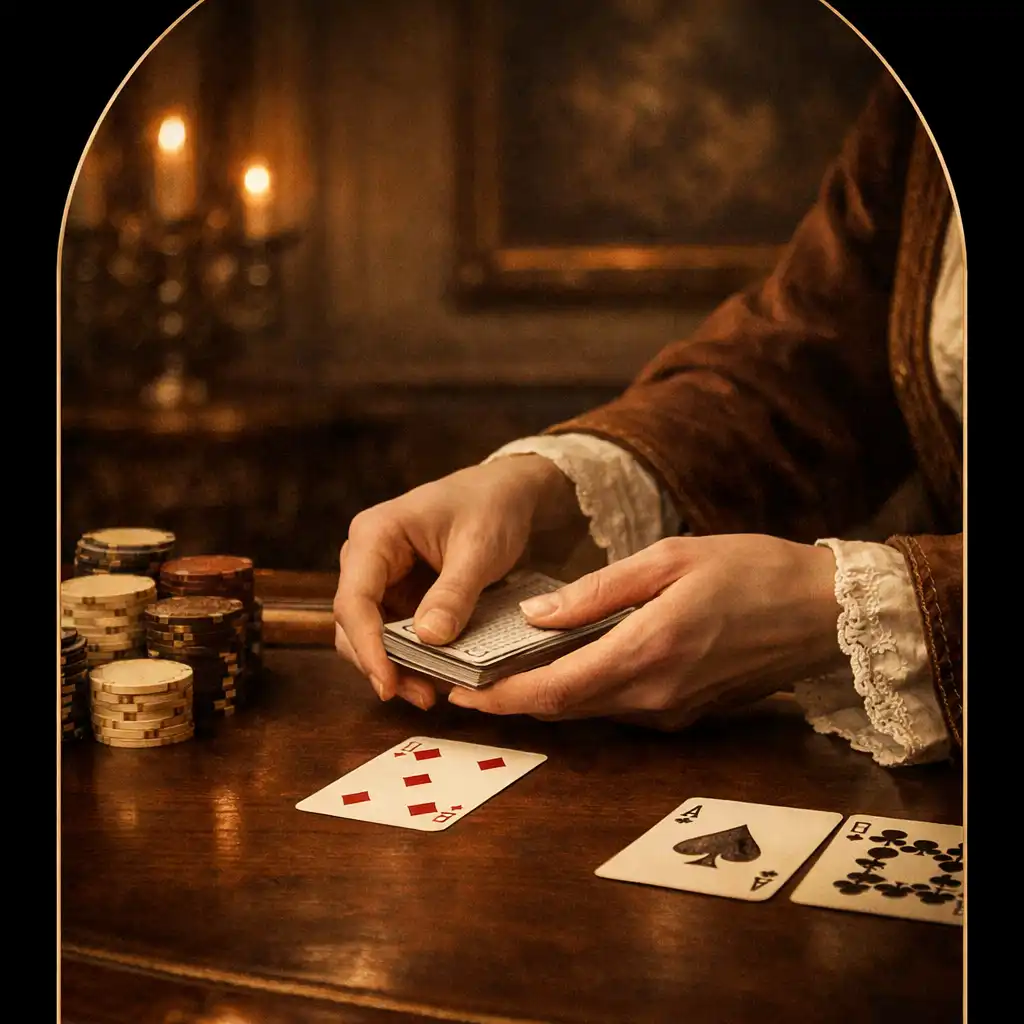
The dealer is the custodian of the poker table's rhythm. Players should give the dealer their full attention, avoid touching the cards before they are dealt, and wait for the signal to act. The dealer's movements are deliberate and unhurried, and players' hands remain visible and still during the deal. This quiet attention turns each hand into a small ceremony.

Each player acts in turn, without rushing or delaying. The pace of the poker game is set by the table, not by any single player. A measured pause before acting is a sign of consideration. No one should act out of turn, and deliberate pauses maintain the evening's calm. The deal is a shared rhythm, and every player is part of its measure.

Hands dealing cards gently on a softly lit poker table with neat chip stacks nearby
Plate VII — Fig. 1 The ritual of the deal

The Language of Chips

  1. I

    Chip Placement

    Chips are kept in their designated trays or stacks, arranged neatly to preserve the table's symmetry. Each player has a chip tray, and stacks should be aligned and orderly. Avoid scattering chips or using them to fidget. A tidy tray is a quiet compliment to the table.

  2. II

    Chip Movement

    When moving chips, do so with a light touch, placing them gently rather than tossing or sliding them. Chips are handled one at a time or in small groups, and the sound of chips should be a soft clink, not a clatter. Rough handling disrupts the atmosphere and draws attention away from the game.

  3. III

    Chip Aesthetics

    The colour and arrangement of chips contribute to the poker table's visual composition. Chips are designed to complement the Renaissance palette, and their arrangement is part of the evening's art. Players are encouraged to appreciate the chips as part of the still life, not merely as game pieces.

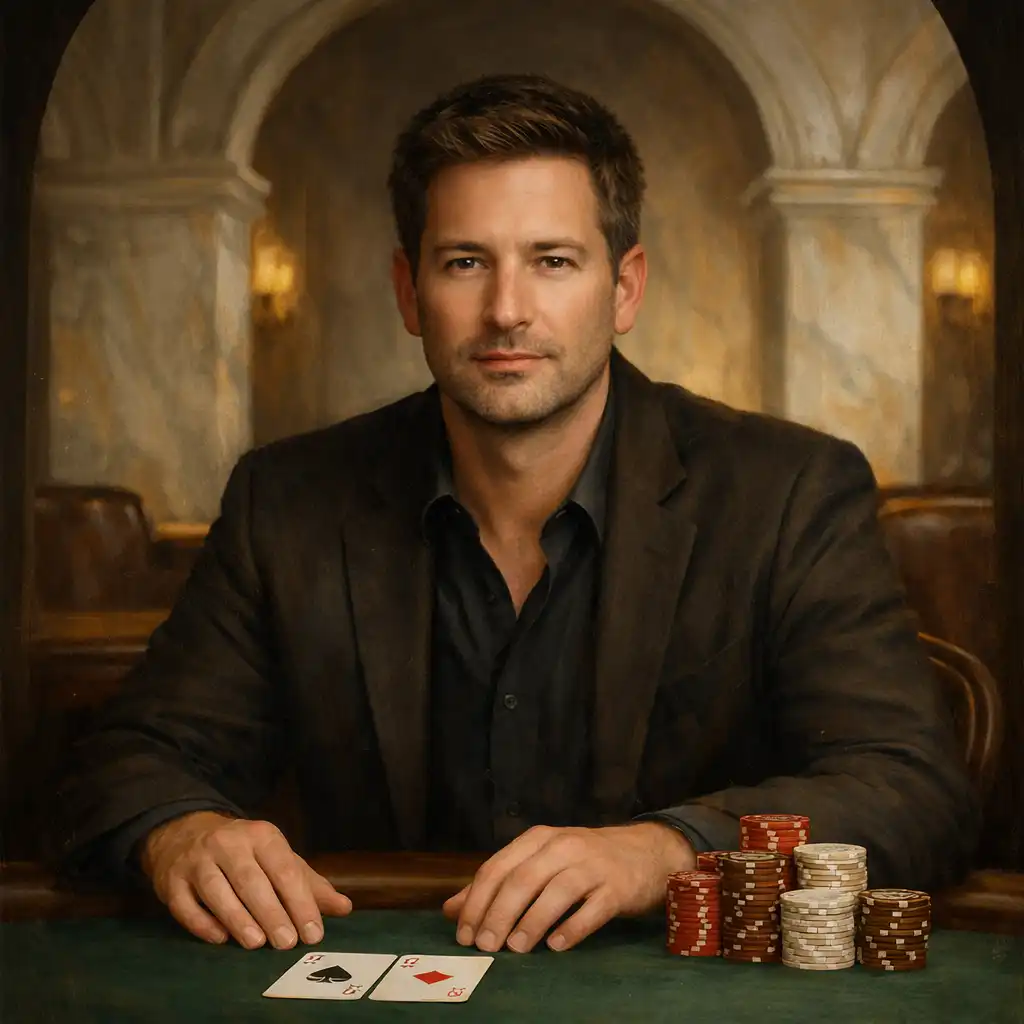
A composed poker player seated calmly at a table in a softly lit Renaissance-style card lounge
Plate VII — Fig. 2 The composed player

The Composed Player

Sit upright but relaxed, with hands resting lightly on the table. Avoid leaning over the table or crowding other players' space. Good posture reflects respect for the table, and personal space is maintained at all times. Your presence should be as composed as the room itself, a calm figure within the gallery's frame.

The poker table is a place for quiet focus, not dramatic reactions. Whether the hand is favourable or not, maintain an even demeanour. Avoid visible frustration or excitement, and remember that a calm expression is part of the etiquette. A composed player contributes to the evening's harmony, letting the game unfold without disturbance.

Private Evenings and the Poker Table

Intimate Gatherings

Private evenings at Ashend Willoow bring the poker table into a more personal setting. The same etiquette applies, but with an added emphasis on attentiveness to the host and fellow guests. Private evenings are hosted in a dedicated salon space, and the host may introduce specific table customs. In a smaller group, every courtesy becomes more visible, and every gesture carries greater weight.

The Host's Guidance

During a private evening, the host acts as the guide to the poker table's etiquette. Guests are encouraged to follow the host's lead, from seating arrangements to the pace of play. The host ensures the evening flows smoothly, and guests should defer to the host's instructions. This shared attention keeps the gathering intimate and unhurried, like a private viewing in a quiet gallery.

Frequently Asked Questions

Question I

May I bring my own chips to the poker table?

No, Ashend Willoow provides all chips as part of the table's setting. The house chips are designed to match the salon's aesthetic, and outside items are not allowed on the table. Bringing outside chips would disrupt the visual harmony and is not permitted.

Question II

Is there a dress code for the card lounge?

Smart casual attire is recommended to match the gallery atmosphere. The dress code is in keeping with the restaurant's standards, and comfortable but elegant attire is appropriate. Guests are asked to avoid overly casual clothing, such as sportswear or beachwear.

Question III

Can I use my phone at the poker table?

Phones should be silenced and kept out of sight during poker play. The card lounge is a space for focused, present interaction, and the table is a phone-free zone. Phones may be used in designated areas outside the lounge.


A Quiet Invitation

To experience the card lounge and its poker-table etiquette firsthand, we invite you to join us for an evening. The card lounge is open during restaurant hours, and private evenings can be arranged for groups. Reservations can be made through our contact page or by phone.

Contact us to plan your visit · +61255501234


This plate is part of the Ashend Willoow Almanac, a collection of guides to the restaurant and offline poker salon. It was composed with the same care as the card lounge itself.